
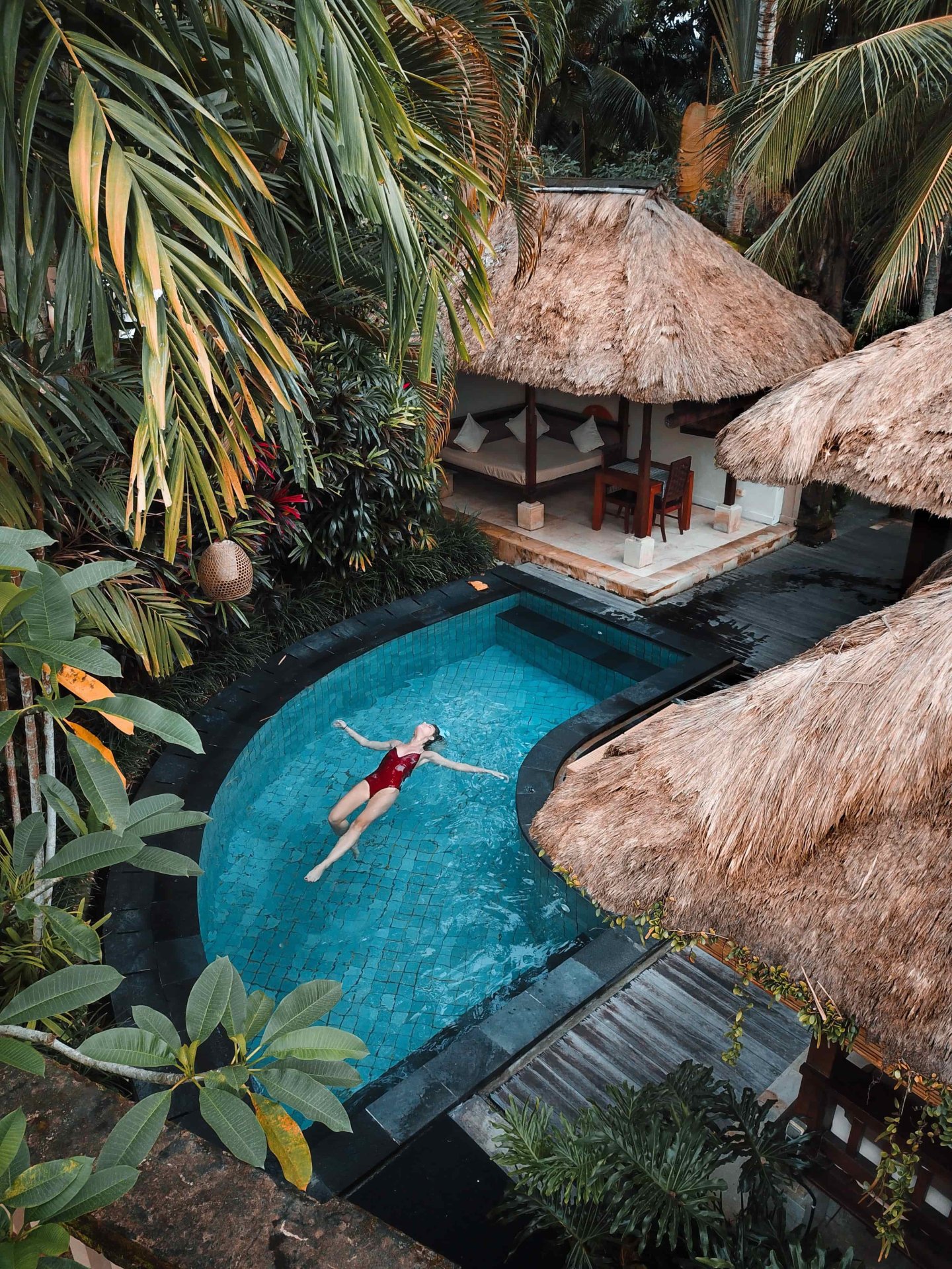
Ubud doesn’t feel like the rest of Bali. There are no beach clubs, no surf breaks, no coastal sunsets. Instead, the rhythm here is set by rice fields, temple ceremonies, yoga classes, and the sound of rain on jungle roofs.
For many expats, remote workers, and creatives, that’s exactly the point.
Days that start with green
In Ubud, mornings often begin with a view of rice terraces or jungle valleys.
Many villas sit on or near rice fields, with owners waking up to mist over the paddies and the call of roosters.
Breakfast might be at home on a balcony overlooking the valley, or at a nearby café like Bali Buda, Zest, or Moksa, where plant‑based bowls and fresh juices are the norm.
From there, it’s a short scooter ride to coworking spaces like Hubud or Outpost, where digital nomads and founders gather for work and community events.
Unlike coastal areas where the day often starts with beach time, Ubud mornings are more about grounding: yoga, meditation, slow coffee, and focused work.
Afternoons: markets, classes, and jungle errands
Early afternoons in Ubud are for errands and wellness.
The Ubud Organic Market (held on Wednesdays at Bali Buda) is a weekly ritual for many residents, offering fresh local produce, cheeses, breads, and homemade goods.
Yoga and movement studios are everywhere: from The Yoga Barn and Radiantly Alive to smaller neighbourhood shalas offering drop‑in classes.
Local shops sell everything from natural skincare to handmade ceramics, supporting a lifestyle that values craftsmanship and sustainability.
Grocery runs might take you to Pepito, Bintang, or smaller warungs for fresh fruit, vegetables, and staples. For many, the “gym” is a yoga class, a hike up the Campuhan Ridge, or a swim in a villa pool surrounded by jungle.
Evenings: culture, community, and quiet nights
Evenings in Ubud tend to be low‑key.
Some nights are for cultural events: traditional dance performances at the palace or local temples, art exhibitions, or live music at small venues.
Other nights are for community: dinners with friends at farm‑to‑table restaurants, talks at coworking spaces, or informal gatherings in villas.
Compared to Canggu or Seminyak, there are fewer late‑night bars and clubs. The party energy is quieter, more about conversation than DJs.
For many residents, this is the real luxury of Ubud: the ability to end the day with stillness, not noise.
Who Ubud suits best
Ubud isn’t for everyone, and that’s part of why it works so well for the people who choose it.
It tends to suit:
Creatives, writers, and artists who want space, inspiration, and a slower pace.
Wellness‑focused people who prioritise yoga, meditation, and healthy food over beach life.
Families and long‑term expats who value culture, nature, and a strong sense of community.
It’s less ideal for:
Those who want to be near the ocean or live a beach‑centric lifestyle.
People who thrive on high‑energy nightlife and constant social stimulation.
Anyone who dislikes humidity, insects, or a more rural environment.
In Ubud, lifestyle isn’t an add‑on; it’s the main product. You’re not just buying a villa; you’re choosing a way of living.
DreamRue Property, August 2026