
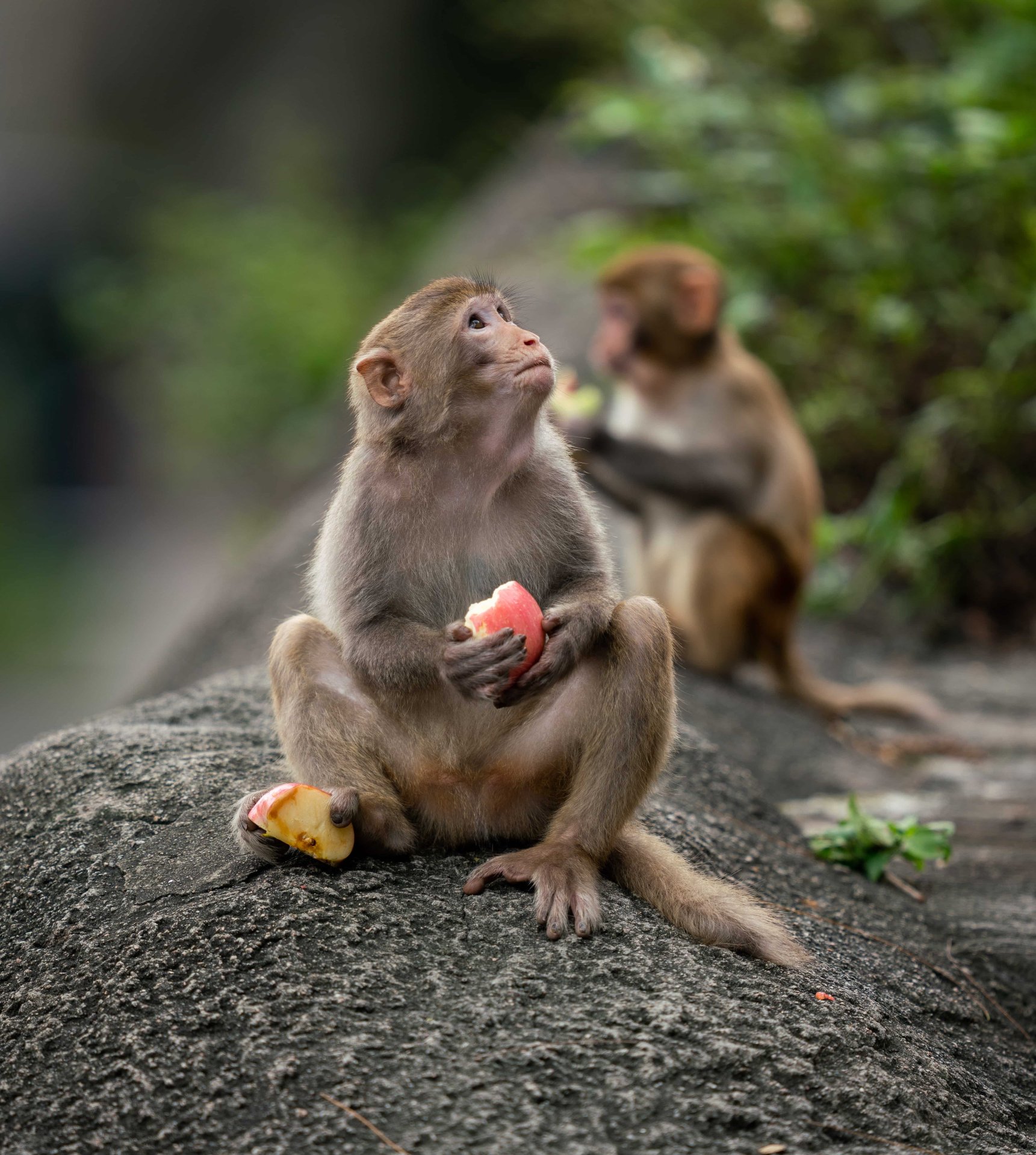
In the southern edge of central Ubud, there’s a patch of forest that feels older than the town around it. Tall trees twist above mossy stone statues. Ancient temples peek through the canopy. And everywhere you look, long‑tailed macaques move with casual confidence, as if they own the place.
This is the Sacred Monkey Forest Sanctuary, or Mandala Suci Wenara Wana — a 12.5‑hectare reserve that’s been part of Ubud’s spiritual and cultural life since at least the 14th century.
A forest older than Indonesia
Local stories and historical records trace the origins of the Monkey Forest back to the founding of Padangtegal Village in the 14th century. The community regarded the forest as sacred, believing it was inhabited by benevolent spirits and powerful Gods.
The long‑tailed macaques living here — now over 1,260 individuals — are seen as more than wildlife. In Balinese Hinduism, monkeys are associated with Lord Hanuman, the divine monkey god, and are treated as sacred animals symbolising protection and mischief.
Three Hindu temples stand within the sanctuary, all dating back to the 14th century:
Pura Dalem Agung Padangtegal
Pura Beji
Pura Prajapati
Together with the forest and the monkeys, they form a living cultural and spiritual heritage, not just a tourist attraction.
From royal hunting ground to protected sanctuary
Some accounts say the area was once a royal hunting ground during the reign of King Sri Aji Jaya Pangus in the 11th century, before becoming a protected sacred forest through royal decree. Over time, as Ubud grew into an artistic and cultural centre, the forest remained a constant — a green, spiritual core in the middle of a changing town.
In 1982, the local community formally designated the area as the Sacred Monkey Forest Sanctuary and began organised conservation efforts, including expanding the forest in the 1990s to accommodate the growing monkey population. Today, the sanctuary is managed by Padangtegal Village and plays a vital role in:
Preserving Balinese Hindu heritage through temple rituals.
Maintaining biodiversity, with over 115 species of trees and plants.
Educating locals and tourists on wildlife conservation.
Living next to the sanctuary
For people who live in the surrounding lanes of Padangtegal and central Ubud, the Monkey Forest is part of daily life.
In the early morning, you can hear monkeys calling from the canopy before the first tourists arrive.
Local priests and villagers still perform ceremonies in the temples, maintaining the site’s spiritual function.
Residents know the rules by heart: don’t bring food into the forest, don’t flash bags or shiny objects, and respect the monkeys as sacred beings, not photo props.
Visitors see the Monkey Forest as a stop on their Ubud itinerary. For locals and long‑term residents, it’s a neighbourhood landmark — a place where culture, nature, and daily life intersect.
A reminder of balance
The Monkey Forest is built on the Balinese philosophy of Tri Hita Karana: harmony between humans, nature, and the divine. That idea isn’t just for tourists; it’s a guide for how people live around the sanctuary.
For villa owners and long‑term residents in Ubud, the story of the Monkey Forest is a reminder: you’re not just buying a property in a pretty town. You’re stepping into a landscape where temples, forests, and communities have coexisted for centuries — and where the monkeys, in their own mischievous way, are still very much at home.
DreamRue Property, August 2026